We shot 25 frames of our own watches.
Then our inspector killed 23.
When we tightened our fidelity inspector — four passes: full-frame comparison, feature close-ups, a forensic artifact hunt, and an adjudicator — we pointed it at the catalog we had already shot for our own store. Most frames looked great at browsing size. At forensic zoom, they didn't hold: bezel numerals garbled, hands detached from their mounts, logos drifting into shapes that weren't ours.
So we killed them. Publicly. That's the deal this studio offers: the inspector answers to the product, not to us. Watches are the hardest thing you can ask an image model to respect — micro-text, precise hands, repeating links. Simpler products (candles, ceramics, apparel, soft goods) pass at far higher rates. Either way, the same rule holds: if a frame lies about your product, you never see it — and you certainly never pay for it.
Half Meloner
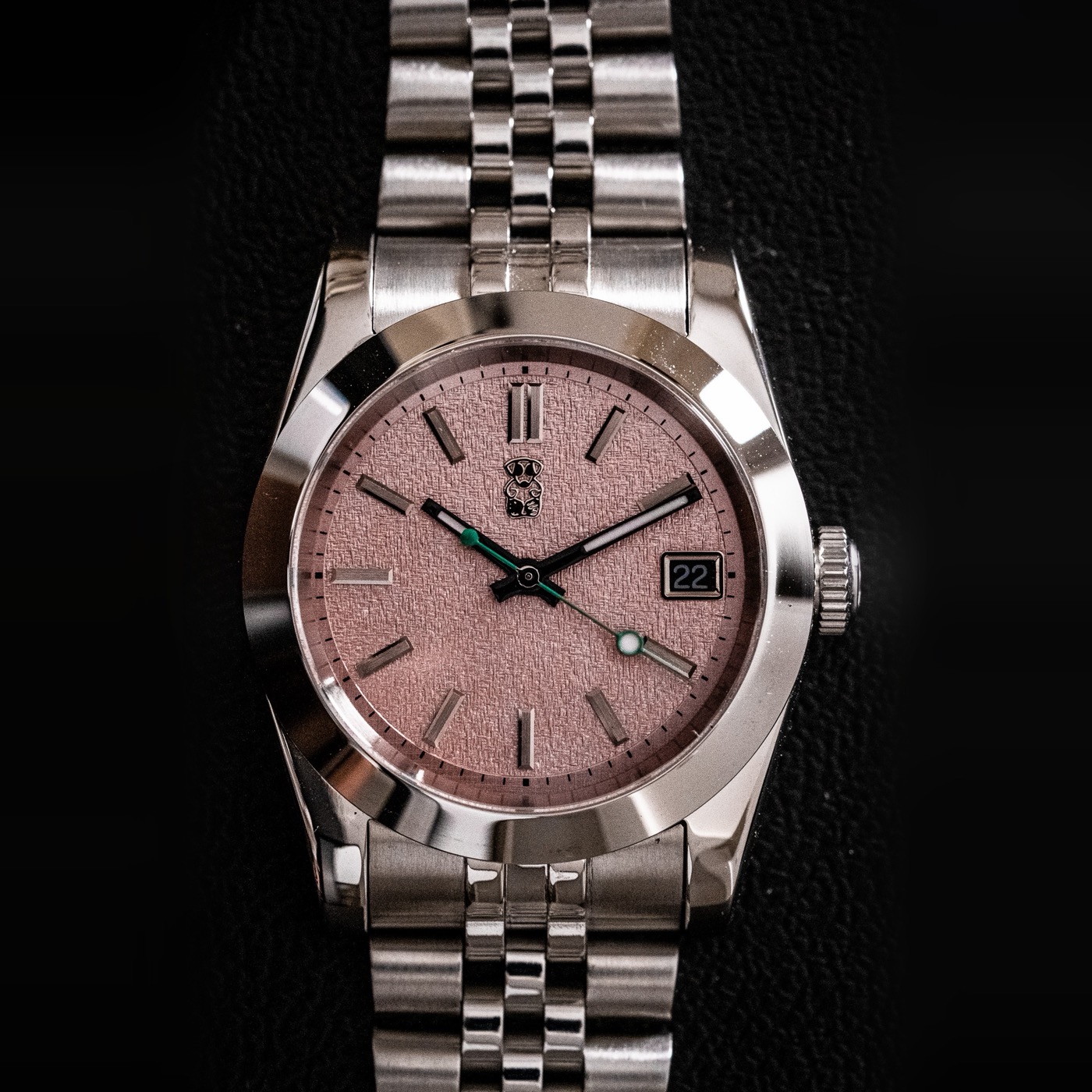
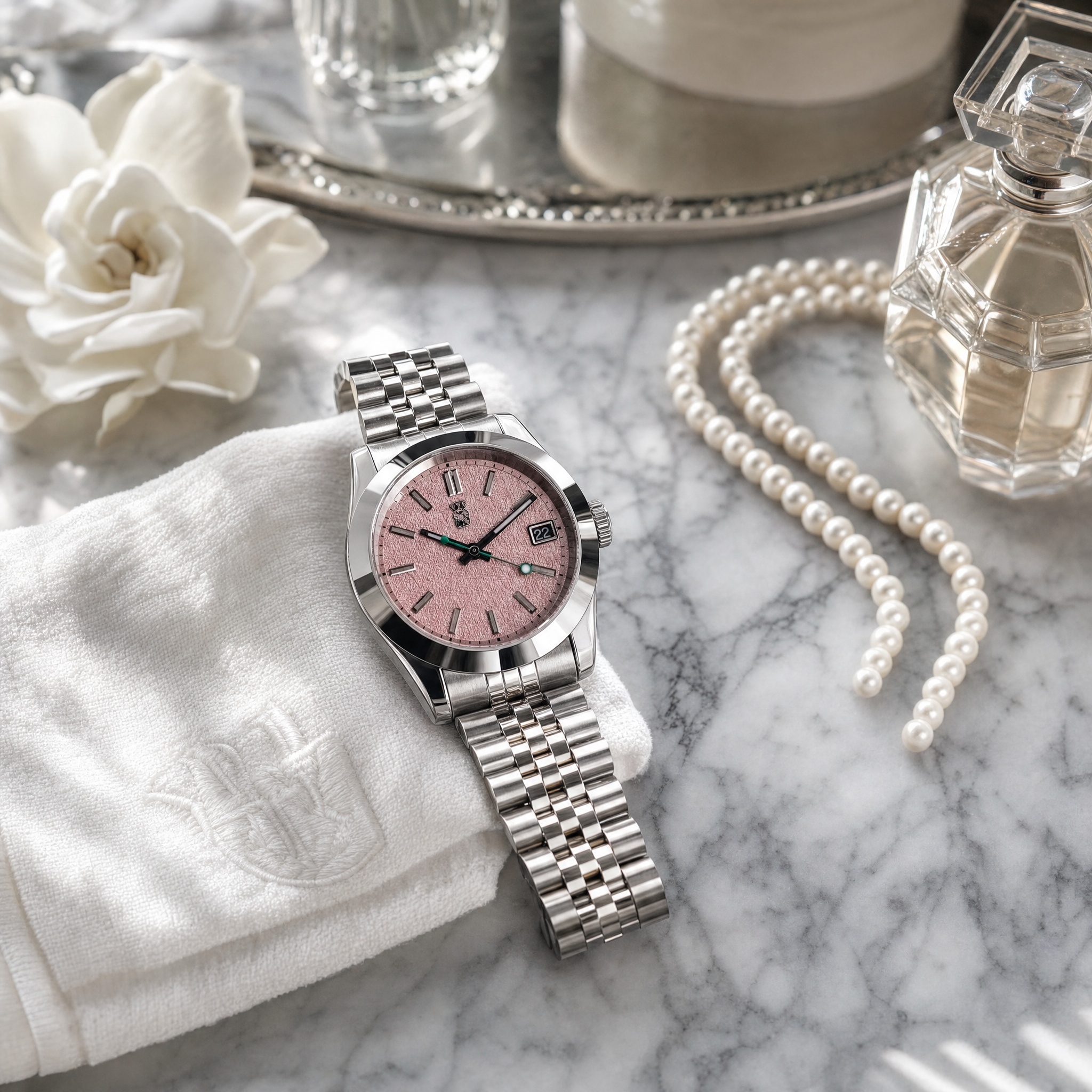
Inspector's log: “seconds hand floating off the pinion; logo smudged.” Reshoot queued behind a studio upgrade that composites your real product pixels instead of re-rendering them.
Snowmobiler
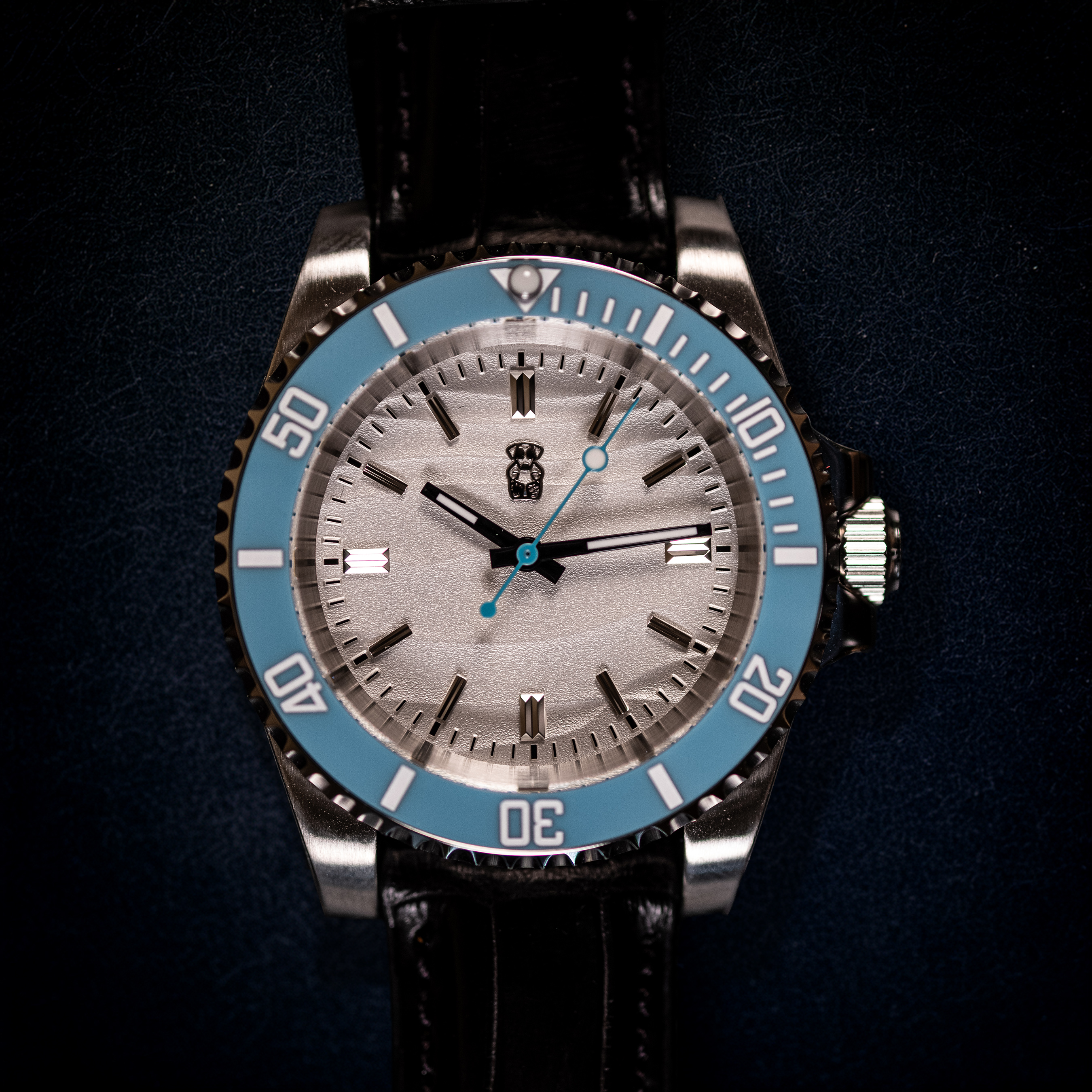
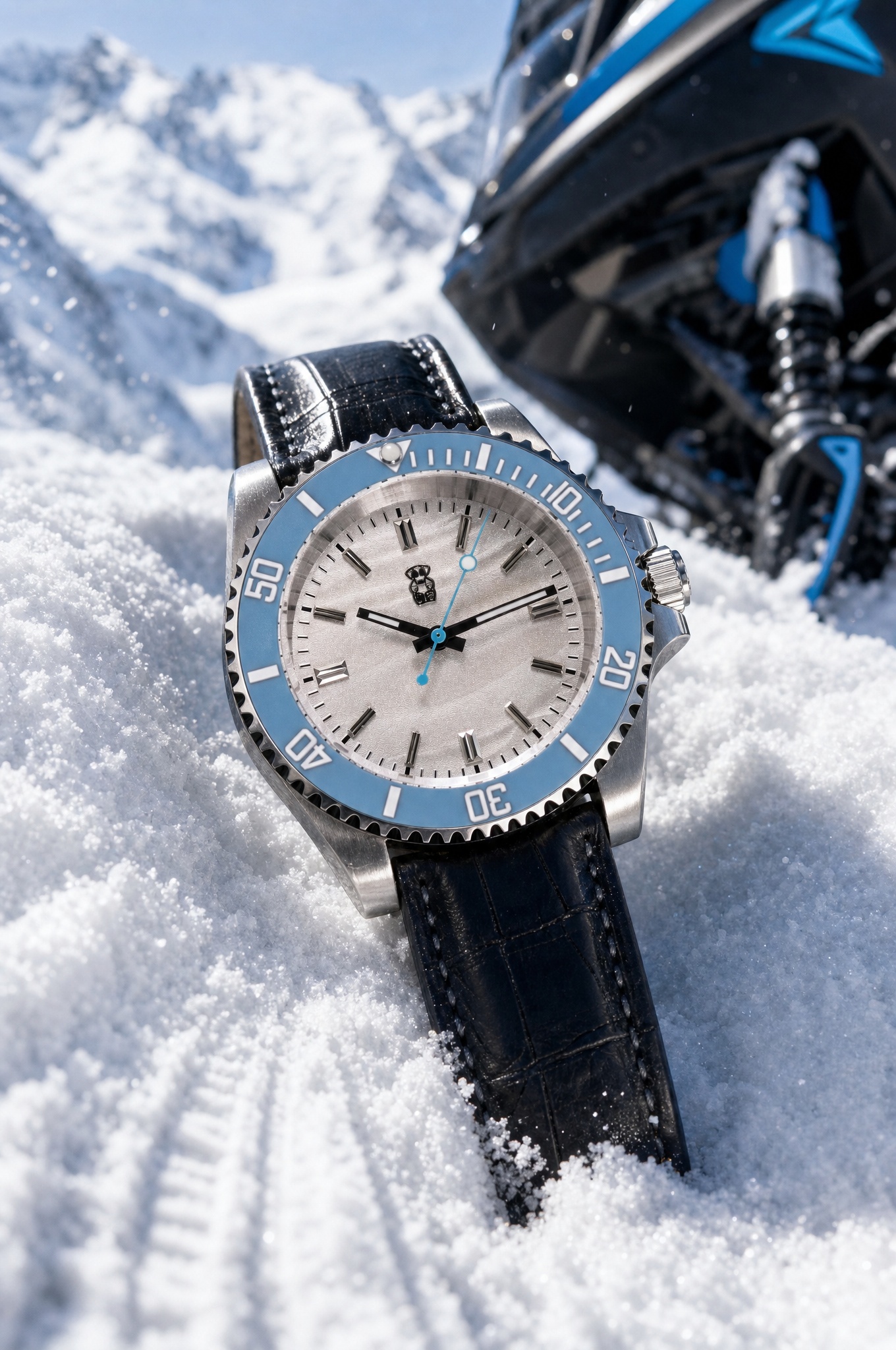
Inspector's log: “bezel numerals malformed; hour hand detached at hub.” Reshoot queued behind a studio upgrade that composites your real product pixels instead of re-rendering them.
Doubleshot GMT
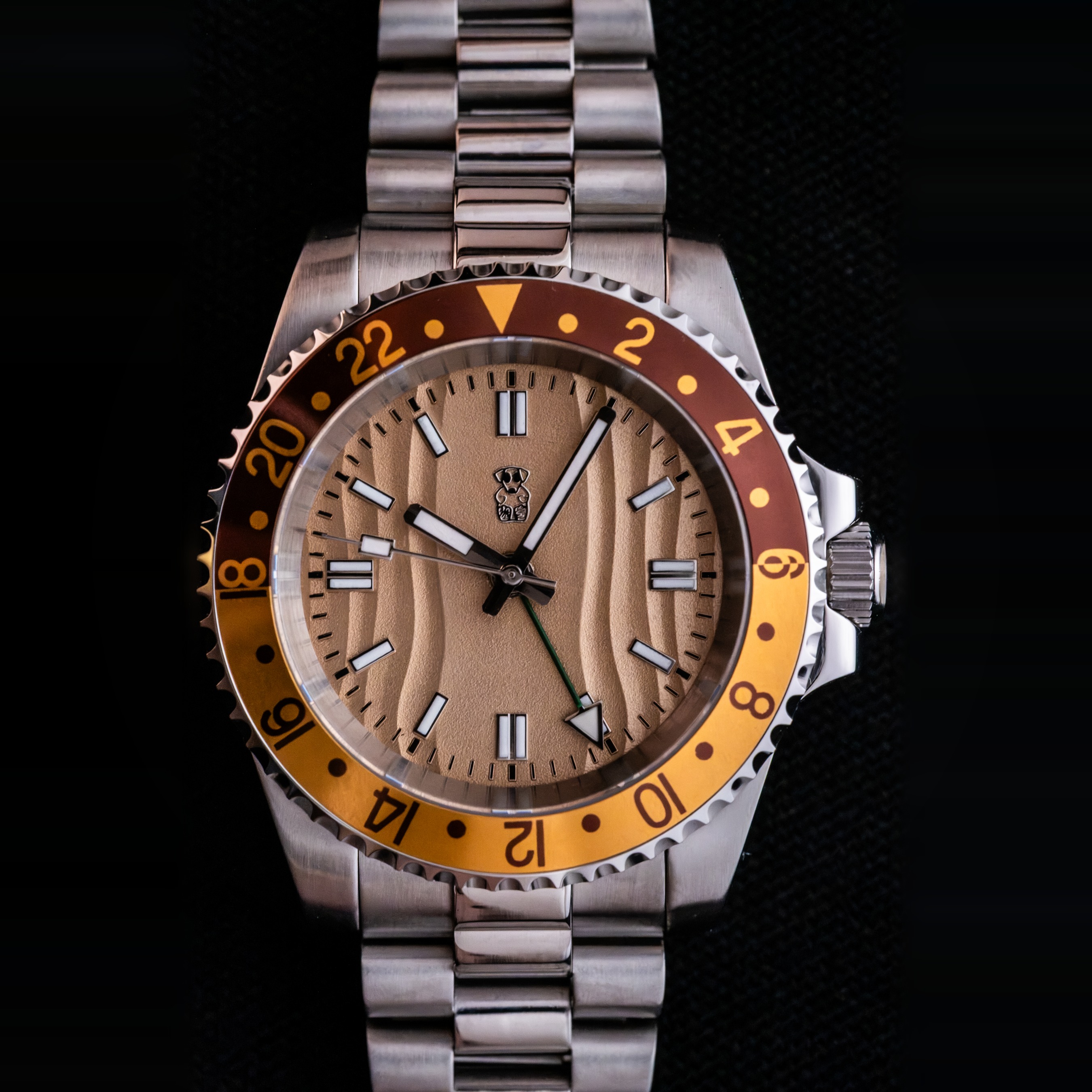
Inspector's log: “24-hour bezel sequence garbled; GMT hand floating.” Reshoot queued behind a studio upgrade that composites your real product pixels instead of re-rendering them.
GMT Challenger
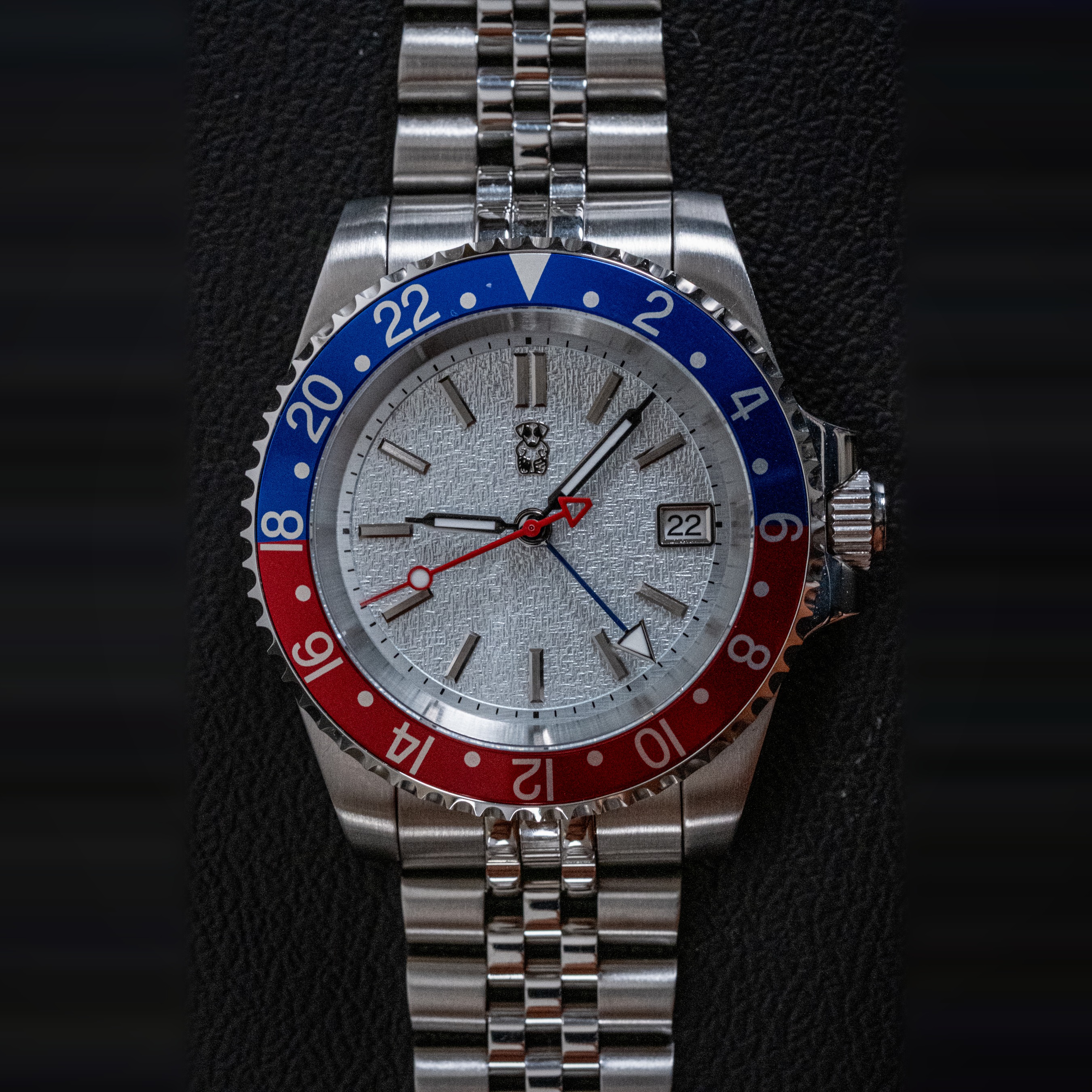
Inspector's log: “mirrored bezel numerals; duplicated hand tips.” Reshoot queued behind a studio upgrade that composites your real product pixels instead of re-rendering them.
Offshorer & Submeloner
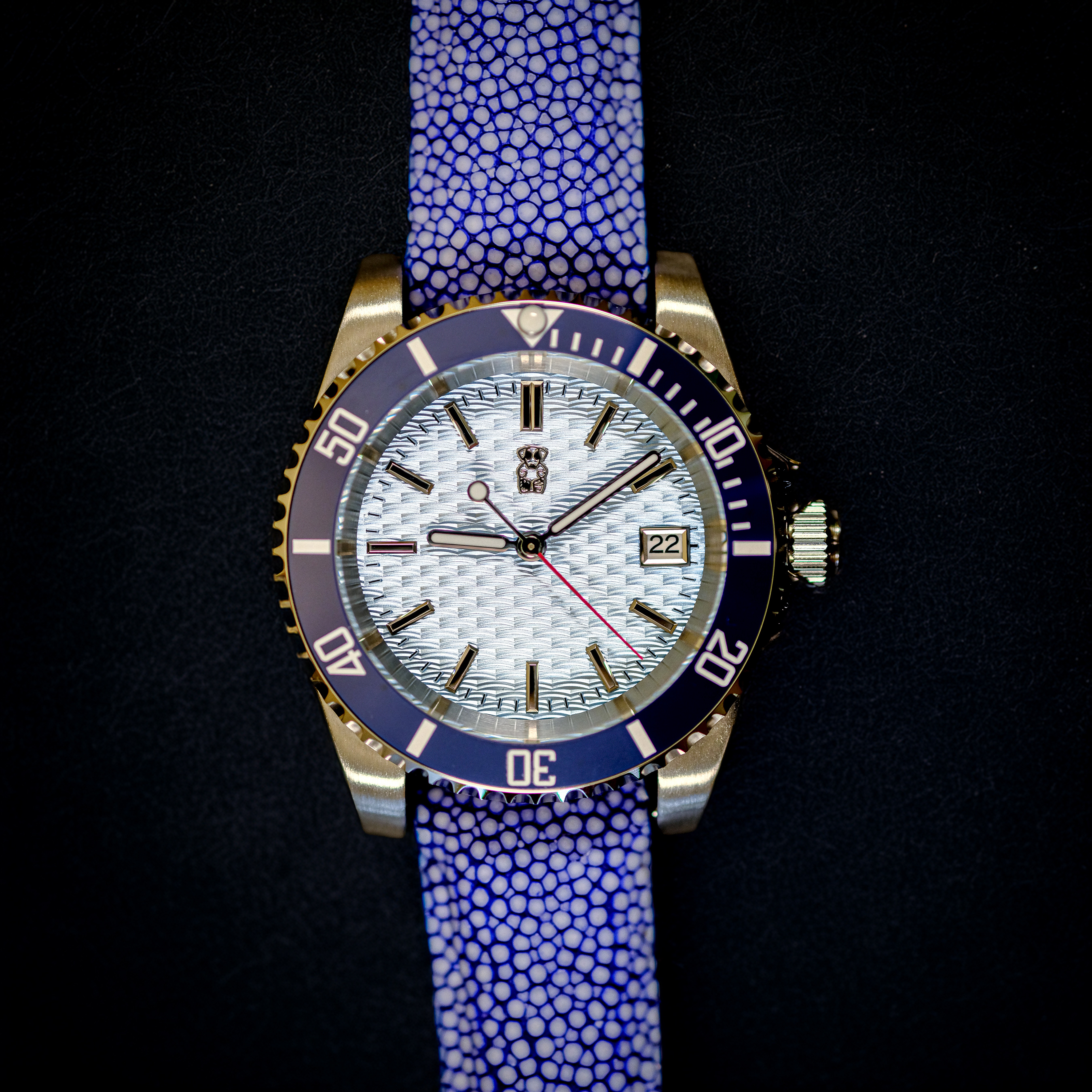
Inspector's log: “logo swapped to a crown; gold trim invented on bezel.” Reshoot queued behind a studio upgrade that composites your real product pixels instead of re-rendering them.
Your product gets the same inspector. Free to find out.
Upload a photo — previews are free →